My subspecialty
Spine surgery
The spine is my fellowship specialty: cervical, thoracic, and lumbar. My job is to identify precisely what your case needs — and when surgery is the best option for you, I perform it with the most advanced minimally invasive techniques: incisions measured in millimeters that, in appropriate cases, may allow for less pain and a faster recovery.
When surgery is considered
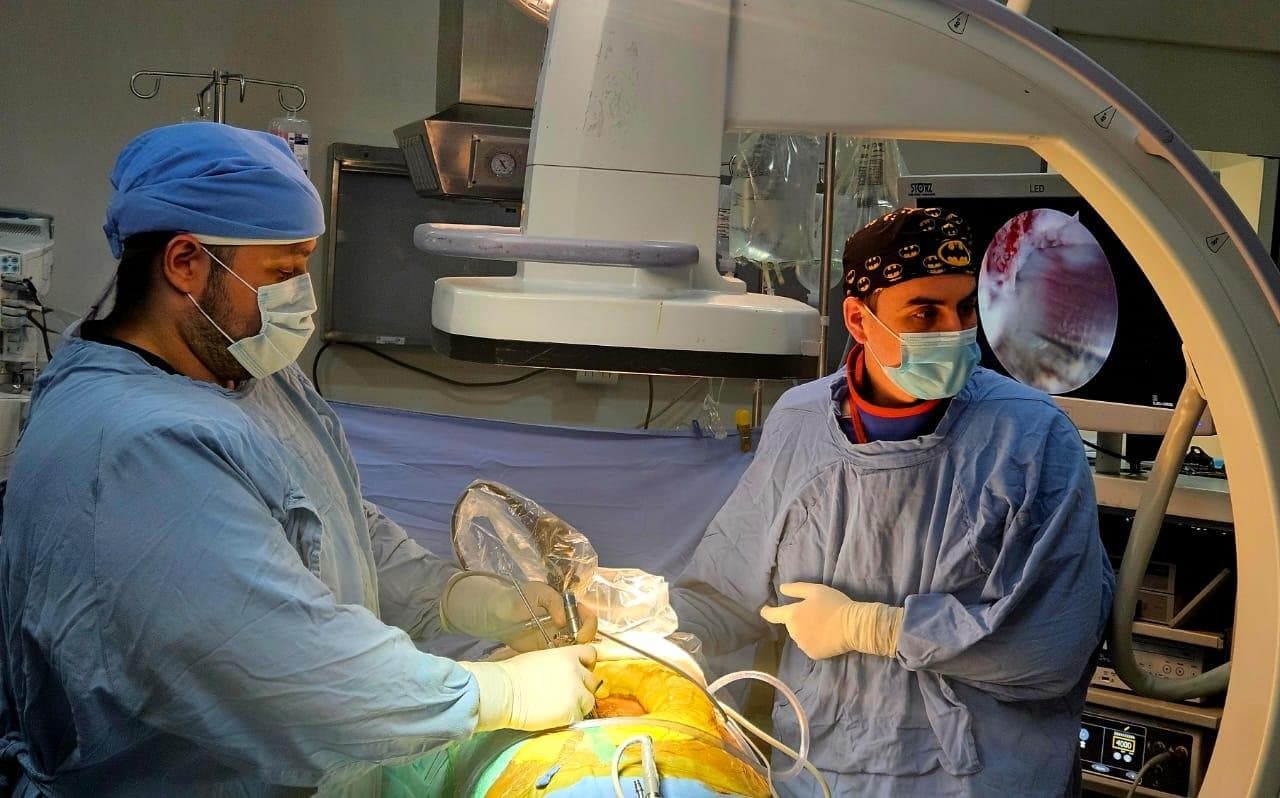
Spine surgery is considered when a proper course of conservative treatment hasn't been enough, or when there are findings that can't wait: progressive loss of strength, worsening numbness or sensory changes, or significant nerve compression. It is rarely the first option for pain alone; conservative treatment comes first. My commitment is to recommend surgery only when it is truly the best thing for you.
Minimally invasive techniques: when they're an option — and when they're not
My fellowship training includes minimally invasive techniques: operating through incisions of one to two centimeters — less than an inch — sparing the muscle, with less bleeding and a faster recovery. Not every case is a candidate for minimally invasive surgery, and knowing exactly which ones are is part of my specialty — so you always get the technique best suited to your case. When your case allows it, these are the techniques I use:
Endoscopic microdiscectomy
Removal of the herniated disc through an endoscope, with an incision under one centimeter. Most patients go home the same day or within 24 hours.
Percutaneous instrumentation
Screws and rods placed through the skin, without cutting the back muscles. Less bleeding and less pain after surgery.
Kyphoplasty and vertebroplasty
Stabilization of vertebral compression fractures — common in osteoporosis — using bone cement. Most patients feel relief within hours.
Navigation-assisted surgery
Real-time image guidance to place each implant with pinpoint precision, keeping your nerves safe.
Not a candidate for minimally invasive surgery? I also perform open surgery when it's the safest option — I choose the technique based on your anatomy and your diagnosis, not on trends.
What recovery looks like
It depends on the procedure, but with minimally invasive surgery most of my patients walk the same day, go home within 24 to 48 hours, and return to light activity in two to four weeks. You'll leave with a clear recovery plan and scheduled follow-ups — and my personal WhatsApp for anything that comes up.
Were you told you need spine surgery?
A timely second opinion is worth a lot. Get a free assessment of your case, or message me.